A comprehensive guide to creating a sacred prayer space in your home — from choosing the right location and essential icons to proper arrangement, accessories, and care traditions.
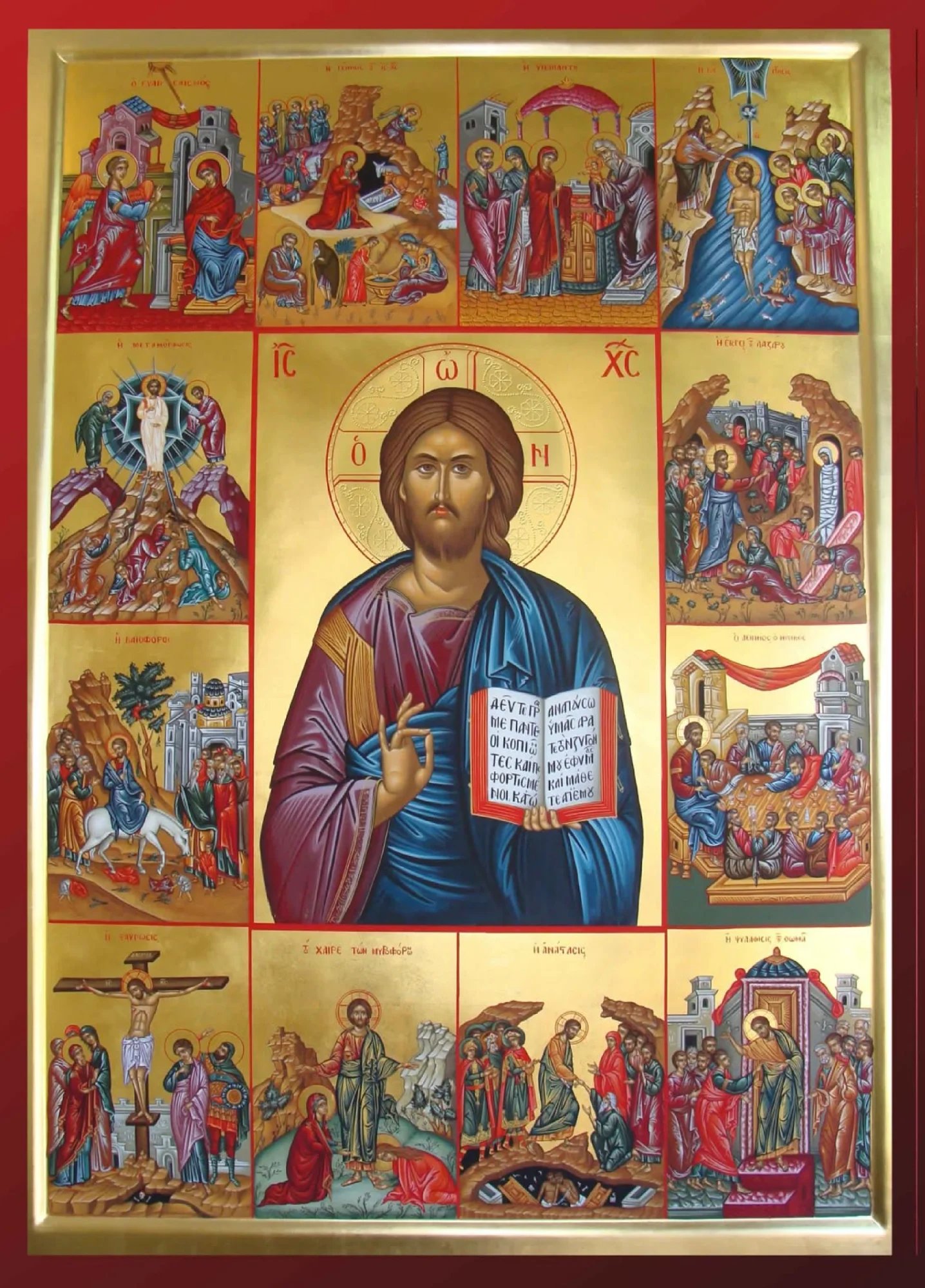
Christ Pantocrator surrounded by the Twelve Feasts — a magnificent centerpiece for any icon corner
Introduction: The Domestic Church
In Orthodox tradition, the home is called the "domestic church" (ecclesia domestica). Just as a church building contains icons that sanctify the space and orient worship, so too should the Orthodox home contain a dedicated space for prayer and veneration.
This sacred corner — known as the krasnyj ugol (Russian: "beautiful corner" or "red corner") or icon corner — serves as the spiritual heart of the home, where family prayers are offered and where the presence of the holy is constantly manifest.
Choosing the Location
Traditional Placement: The East
Orthodox Christians traditionally face east when praying, symbolizing:
- The rising sun as an image of Christ, the Light of the World
- The direction of Paradise (Eden was "in the east")
- The direction from which Christ will return
- The orientation of church altars
Therefore, the ideal location for your icon corner is the eastern corner of your main living area, so that when you stand before the icons, you face east.
Ideal Characteristics
- Visibility — The corner should be visible upon entering, reminding all of God's presence
- Accessibility — Easy to approach for prayer, prostrations, and veneration
- Quiet — Away from high-traffic areas, televisions, and noise
- Clean — Not in bathrooms, kitchens (heat/grease), or storage areas
- Dignified — Not above or near inappropriate items
What to Avoid
- Placing icons in bedrooms where marital intimacy occurs (unless a separate corner)
- Bathrooms or toilets
- Garages or utility rooms
- Directly above televisions or entertainment centers
- Areas prone to humidity, heat, or temperature swings
Essential Icons for Your Corner
The Foundation: Christ and the Theotokos
At minimum, every Orthodox home should have icons of:
- Christ — Typically Christ Pantocrator (Almighty) or Christ the Teacher
- The Theotokos — Often Hodegetria or Eleousa type
These two icons form the irreducible core of the icon corner, representing the Incarnation and the path to salvation.


Examples of Theotokos icons suitable for home icon corners
Recommended Additions
| Category | Examples | Purpose |
|---|---|---|
| Patron Saints | Saints whose names family members bear | Personal intercession, name-day celebration |
| Guardian Angel | The Archangel Michael or generic angel icon | Angelic protection |
| Festal Icons | Nativity, Pascha, parish feast day | Liturgical connection, seasonal rotation |
| The Cross | Crucifix or three-bar cross | Central symbol of faith |
| Local or Family Saints | Saints significant to your heritage or parish | Cultural and spiritual continuity |
Building Your Collection Over Time
You need not acquire all icons immediately. A blessed tradition is to:
- Begin with Christ and the Theotokos
- Add patron saints of family members
- Receive icons as gifts at baptisms, weddings, and feast days
- Commission special icons for significant occasions
- Inherit family icons across generations
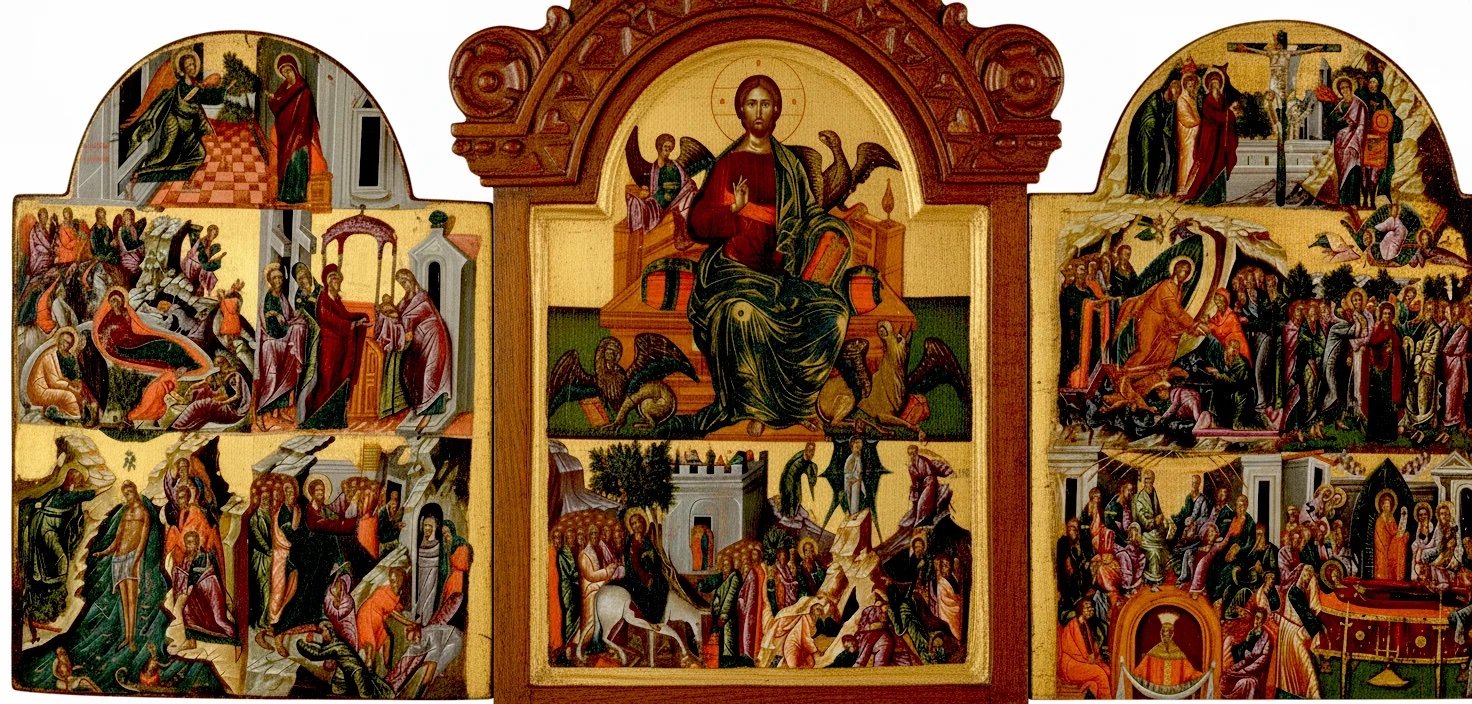
A triptych of the Twelve Feasts — an heirloom piece that becomes more precious with each generation
Proper Arrangement
Hierarchy of Placement
Icons should be arranged according to traditional hierarchy:
Upper Tier (Highest Position)
- The Holy Trinity (if present)
- The Cross (at the very top center)
Central Position
- Christ — Center or right of center (from viewer's perspective)
- Theotokos — Left of center, slightly lower or equal to Christ
Lower Tiers
- Patron saints and angels
- Festal icons
- Other saints and scenes
Key Principles
- Christ is never placed below the Theotokos — She always defers to her Son
- Larger icons belong higher — Creates visual stability
- Avoid crowding — Better to have fewer icons with dignity than many crammed together
- Consistency of style — Not required, but creates visual harmony
Accessories and Adornments
Traditional Elements
| Item | Purpose | Use |
|---|---|---|
| Vigil lamp (lampada) | Represents Christ, the Light | Kept burning during prayer, feast days, or continuously |
| Candles | Prayer offering, light | Lit during prayers |
| Censer | Incense offering | Home blessing, prayer times |
| Holy water | Blessing, protection | Kept in a small vessel |
| Prayer books | Guides for prayer | Kept nearby for use |
| Prayer rope (chotki) | Jesus Prayer | Hung near icons or kept on shelf |
Seasonal Additions
- Palm branches — After Palm Sunday
- Pussy willows — Slavic tradition for Palm Sunday
- Flowers — Fresh flowers for feast days
- Basil — Especially at Exaltation of the Cross
- Red eggs — At Pascha
What Not to Include
- Non-Orthodox religious images
- Photos of living people (deceased may be acceptable nearby)
- Secular decorations
- Electronics
- Random souvenirs or collectibles
Shelf and Display Options
Traditional Icon Shelf
A dedicated corner shelf (Russian: polka) with multiple tiers is ideal. These can be:
- Purchased from Orthodox suppliers
- Custom-built to fit your space
- Simple wall-mounted shelves arranged attractively
Alternative Approaches
- Wall-mounted icons — Arranged directly on the wall in tiers
- Table or dresser — A dedicated table in the corner, covered with a clean cloth
- Cabinet or shrine — Enclosed display for dusty environments
- Niche or alcove — Built-in architectural feature
Care and Maintenance
Environmental Conditions
- Humidity: Maintain 40-60% relative humidity
- Temperature: Avoid extreme fluctuations
- Light: Avoid direct sunlight (fades pigments)
- Airflow: Good ventilation prevents moisture buildup
Cleaning Icons
- Dust gently with a soft, dry brush (natural hair)
- Never use water, chemicals, or glass cleaners
- Never touch the painted surface with bare hands (oils damage paint)
- If significant cleaning is needed, consult a professional conservator
Lamp Safety
- Use proper icon lamp oil (not vegetable oil, which spoils)
- Ensure lamp is stable and cannot be knocked over
- Keep away from curtains and flammable materials
- Consider LED flameless candles if fire safety is a concern
Using Your Icon Corner
Daily Practice
The icon corner should be the center of your prayer life:
- Morning prayers — Begin each day before the icons
- Evening prayers — End the day in prayer
- Before meals — Bless food facing the icons
- Special occasions — Birthdays, anniversaries, decisions
Veneration
Orthodox Christians venerate icons through:
- Making the sign of the cross before and after prayer
- Bowing — Small bows or prostrations
- Kissing — The hands or feet of the figure (not the face)
- Lighting candles and lampadas
- Offering incense
Family Worship
Gather the family for prayers at the icon corner:
- Sunday prayers before or after church
- Feast day celebrations
- Name day observances
- Times of need or thanksgiving
Starting Checklist
Essential Items
- Icon of Christ (Pantocrator recommended)
- Icon of the Theotokos
- Small cross
- Shelf or dedicated surface
- Clean covering cloth
Recommended Additions
- Patron saints of family members
- Vigil lamp (lampada) with oil
- Candles
- Incense and censer
- Prayer book
- Holy water container
Setup Steps
- Choose location (east preferred)
- Install shelf or prepare surface
- Arrange icons by hierarchy
- Add accessories
- Have corner blessed by priest (optional but recommended)
- Begin regular prayer routine
Frequently Asked Questions
Do icons need to be blessed?
While icons are sacred from their creation (having been made through prayer according to tradition), having them blessed by a priest sanctifies them for your specific use and connects them to the Church's prayer.
Can I have icons in multiple rooms?
Yes! While the main icon corner should be in a central living space, it is appropriate to have icons in bedrooms, offices, and other rooms. Many Orthodox have a small icon by their bed for morning and evening prayers.
What about icon prints and reproductions?
Quality reproductions are acceptable, especially when beginning. As resources allow, gradually add handpainted icons. What matters most is the prayer offered before them.
How do I dispose of damaged icons?
Sacred items should never be thrown in the trash. Damaged icons should be either burned reverently, buried in a clean place, or brought to a church for proper disposal.
Commission Icons for Your Home
Create a magnificent icon corner with museum-quality, handpainted icons. We specialize in complex compositions including Great Feasts, Theotokos types, and multi-figure masterworks — sacred art that will be treasured for generations.
Request a Consultation