A comprehensive guide to commissioning authentic, handpainted Byzantine icons — from choosing the right iconographer to understanding traditional techniques and pricing.
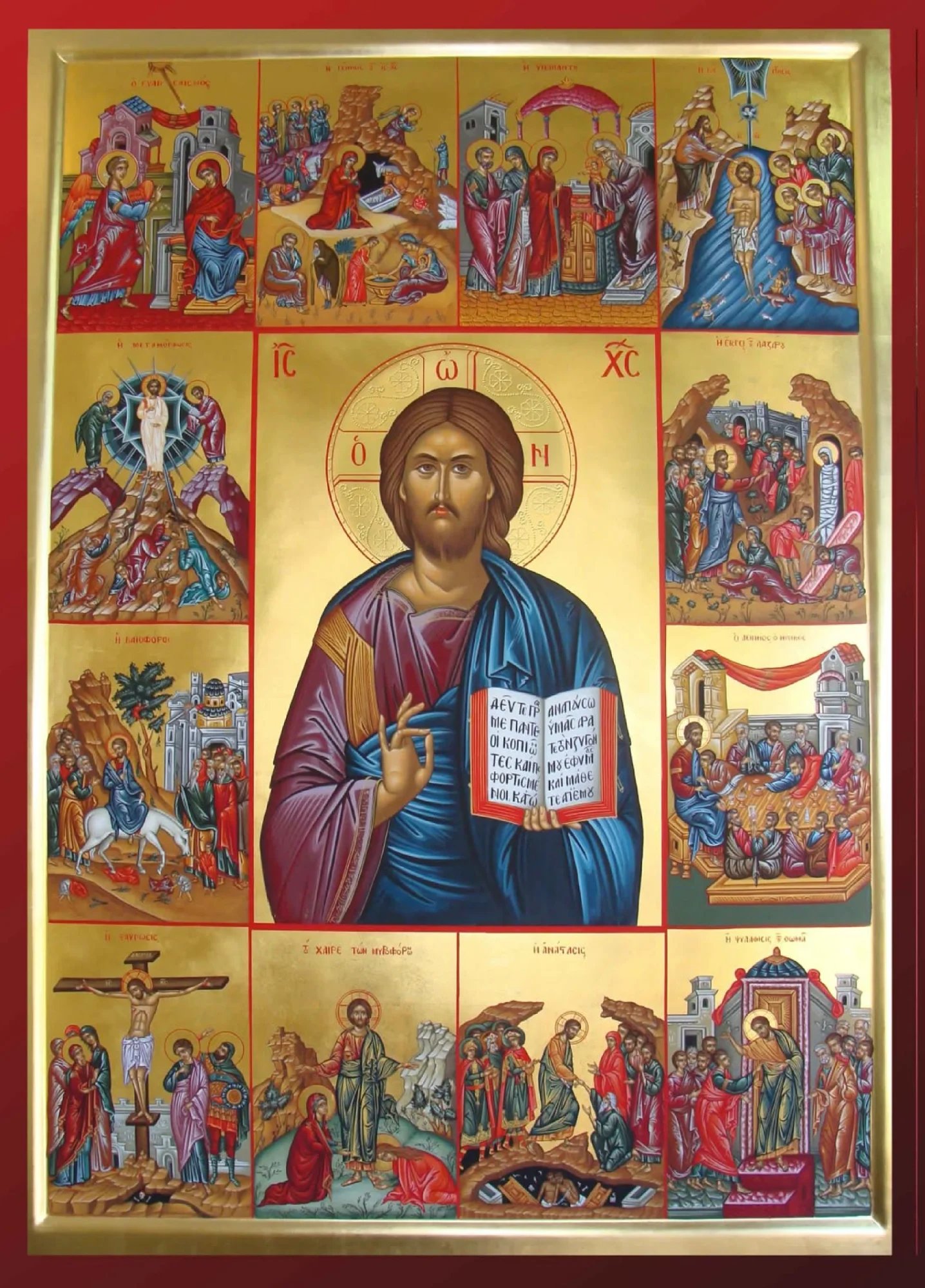
Christ Pantocrator surrounded by the Twelve Great Feasts — an example of complex multi-figure composition
Introduction
Commissioning a Byzantine icon is a sacred journey that connects you with a tradition spanning over 1,500 years. Unlike purchasing mass-produced religious art, a commissioned icon is created specifically for you, your family, or your church through prayer and centuries-old techniques.
Whether you're seeking an icon for your home prayer corner, a gift for a baptism or wedding, or a monumental piece for your parish, this guide will walk you through everything you need to know about commissioning authentic Byzantine iconography.
What Is a Byzantine Icon?
A Byzantine icon (from the Greek eikon, meaning "image") is a sacred painting depicting Christ, the Theotokos (Mother of God), saints, angels, or events from Christian history. Unlike Western religious art, Byzantine icons follow strict theological and artistic canons developed over centuries.

Detail showing the Theotokos enthroned — note the gold leaf background and rich colors
Key Characteristics of Byzantine Icons:
- Inverse perspective — draws the viewer into the sacred space
- Gold backgrounds — representing divine, uncreated light
- Stylized figures — emphasizing the spiritual over the physical
- Symbolic colors — each color carries theological meaning
- Inscriptions — Greek letters identifying the figures depicted
Byzantine icons are not merely decorative art — they are considered "windows to heaven" and serve as focal points for prayer and veneration in Orthodox Christian tradition.
Types of Byzantine Icons You Can Commission
Festal Icons (Great Feasts)
Multi-figure compositions depicting major events:
- The Nativity of Christ
- The Baptism (Theophany)
- The Transfiguration
- The Crucifixion
- The Resurrection (Anastasis)
- The Dormition of the Theotokos
Complex Masterwork Compositions
Large-scale, intricate icons with dozens or hundreds of figures:
- The Second Coming (Last Judgment)
- Hymn to the Theotokos ("In Thee Rejoiceth")
- The Twelve Great Feasts (Dodekaorton)
- Multi-scene narrative cycles

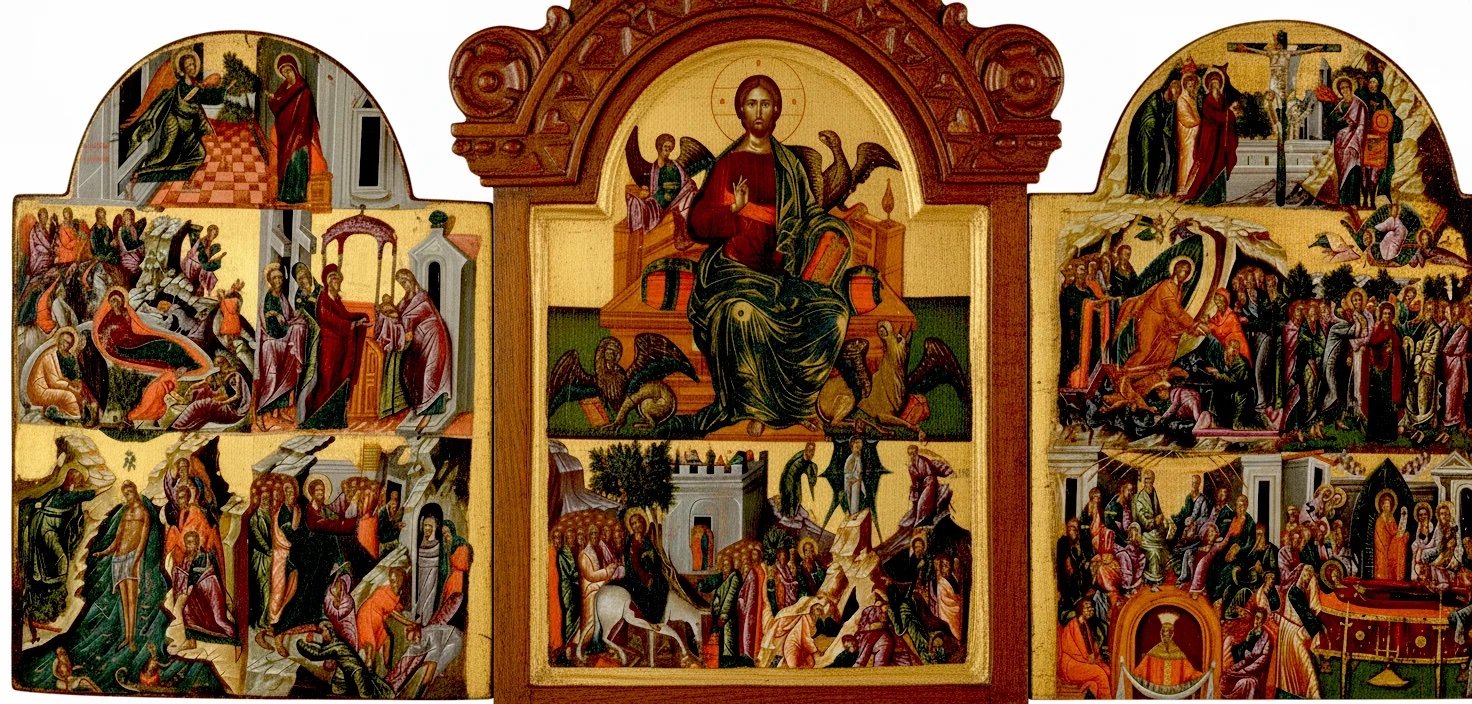
Left: Second Coming (Klontzas style) — Right: Triptych of the Twelve Feasts
How to Choose the Right Iconographer
Selecting an iconographer is the most important decision in your commission. Here's what to evaluate:
1. Training and Tradition
Ask about their background:
- Where did they study iconography?
- What tradition do they follow (Greek, Russian, Cretan, etc.)?
- How many years of experience do they have?
2. Portfolio Review
Examine their previous work:
- Is the style consistent with canonical traditions?
- Do faces have spiritual depth and proper proportions?
- Is the gold work clean and luminous?
- Are inscriptions correctly rendered in Greek or Church Slavonic?
3. Materials and Techniques
Traditional iconographers use:
- Seasoned wood panels (linden, cypress, or alder)
- Natural gesso (chalk and rabbit skin glue)
- Egg tempera (natural pigments mixed with egg yolk)
- Genuine gold leaf (23k or 24k)
- Natural varnishes (olifa)

Close-up showing the fine detail achievable with traditional egg tempera technique
The Commission Process: Step by Step
Step 1: Initial Consultation
Contact the iconographer to discuss subject matter, size, intended location, timeline requirements, and budget range.
Step 2: Proposal and Agreement
You'll receive a detailed quote, estimated timeline, reference images or preliminary sketches, and a formal commission agreement.
Step 3: Deposit Payment
Most iconographers require a 50% deposit to secure your place in their schedule and purchase materials.
Step 4: Icon Creation
The traditional process includes panel preparation, drawing transfer, gilding, painting in egg tempera, inscriptions, and varnishing.
Step 5: Progress Updates
Expect photos at major milestones: completed drawing, after gilding, mid-painting, and before final varnish.
Step 6: Completion and Blessing
Before delivery, the icon is blessed by an Orthodox priest and you receive a certificate of authenticity.
How Much Does a Byzantine Icon Cost?
Pricing varies significantly based on size, complexity, and the iconographer's experience.
General Price Ranges (2025):
| Icon Type | Size | Price Range |
|---|---|---|
| Medium festal icon | 40-50cm | €2,000 - €4,000 |
| Large festal icon | 50-70cm | €4,000 - €7,000 |
| Complex masterwork | 60-100cm+ | €8,000 - €25,000+ |
How Long Does It Take?
Traditional iconography cannot be rushed. Each layer must dry completely before the next is applied.
| Icon Type | Estimated Time |
|---|---|
| Medium festal icon | 3-4 months |
| Large festal icon | 4-6 months |
| Complex masterwork | 8-14 months |
Caring for Your Byzantine Icon
With proper care, a traditionally-made icon can last for centuries.
Do:
- Display in a stable environment (40-60% humidity)
- Keep away from direct sunlight
- Dust gently with a soft, dry brush
- Venerate by kissing the hands or feet of figures (not the face)
Don't:
- Use water, glass cleaner, or chemicals
- Touch the painted surface with bare hands
- Hang in bathrooms or kitchens (humidity damage)
- Store in attics or basements (temperature fluctuations)
Ready to Commission Your Icon?
With over 20 years of experience creating museum-quality Byzantine masterworks, we specialize in complex multi-figure compositions including the Second Coming, Great Feasts, and rare iconographic types.
Request a Consultation